Call: 913-440-4703 KC Metro Area
Signed in as:
filler@godaddy.com

Unlike traditional pest companies that may require multi-month contracts or quarterly sprays, we specialize strictly in fast, targeted single-visit eliminations.
If you already have a pest control contract, there is no need to worry. General pest services often lack specialized knowledge, experience, and personal protection equipment. We collaborate with local pest control providers to address active yellow jacket and hornet issues without disrupting your regular service.
Non-specialized companies frequently employ lower-wage, less experienced technicians who adhere to basic treatment protocols. We accept referrals when regular pest control specialists lack the expertise to identify and manage aggressive nests like yellow jackets, hornets, or wasps. Each job is completed by a Certified Applicator with 10+ years of experience.
Certain companies advertise unnecessary and costly physical nest removals of yellow jackets. Our non-invasive treatments eliminate colonies at their source, enabling the natural decomposition of deceased nests into harmless dust without damaging walls or siding.
Vespula germanica (German)
Nests between walls; often large paper nests. Abdomen markings of workers are usually a diamond-shaped black marking on 1st segment, and typically a black dot (unattached to a black band) on each side of remaining segments.
Vespula squamosa (Southern)
Lengthwise black and yellow stripes on shoulder-like plate just behind head.
Vespula maculifrons (Eastern)
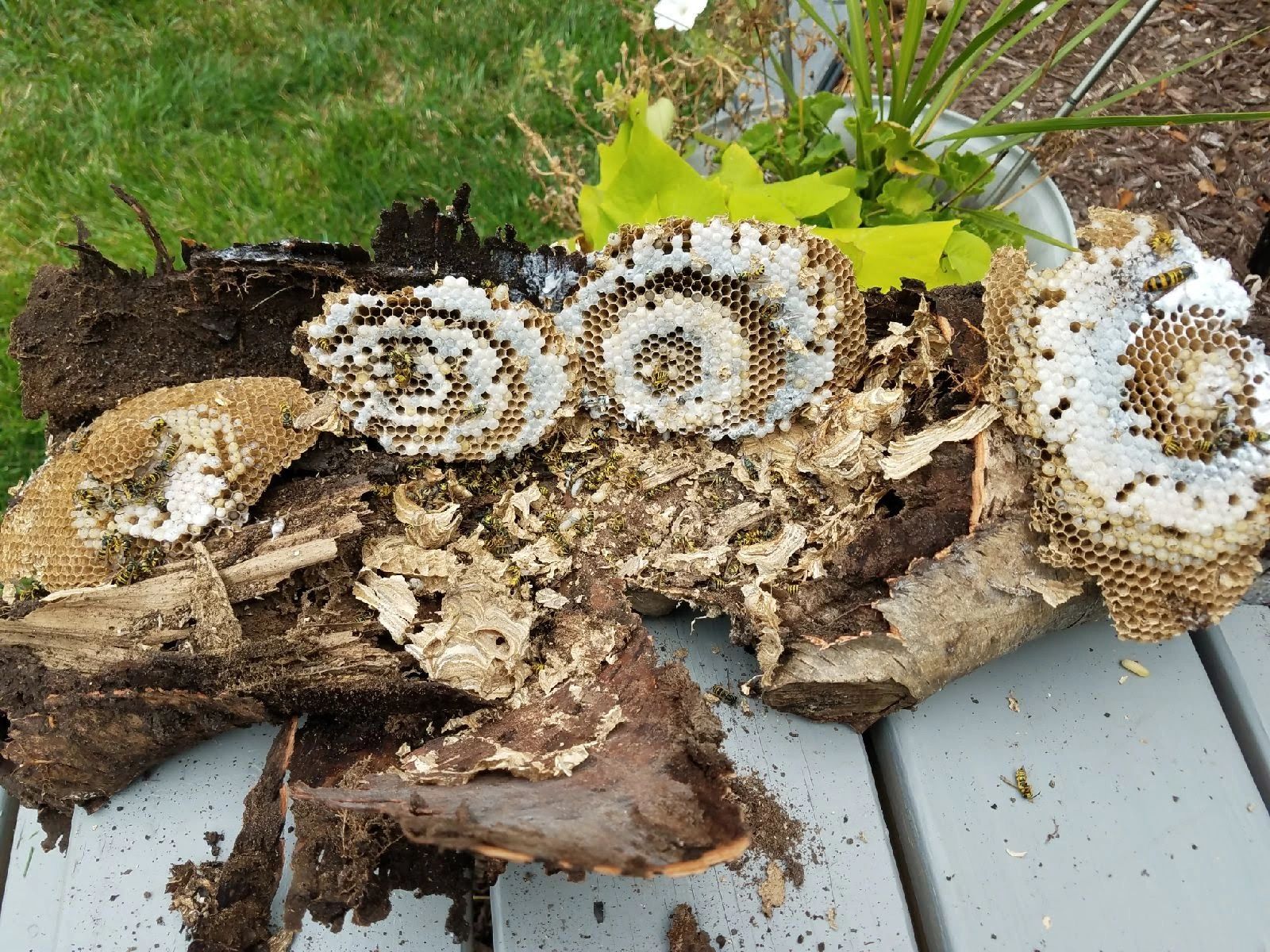
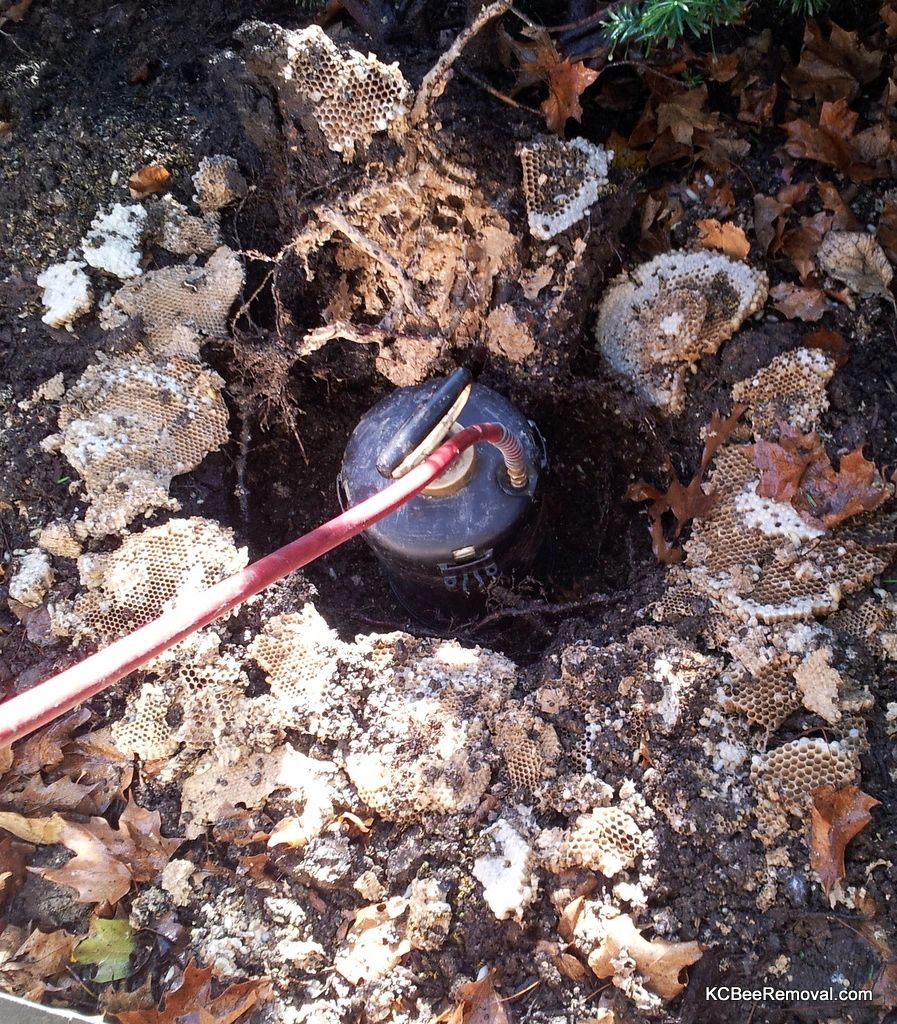
Typically builds paper nests underground. Workers and males have a wide, anchor-shaped black marking, with a flat top, on 1st abdominal segment. Remaining segments have black bands that are flat on top and wavy or zigzagged on bottom edge, but with no free black dots.
Yellow jacket nests increase in numbers gradually in the spring, commencing with a single queen. As the workers diligently collect protein-rich food during this period, the nest undergoes expansion. The workers multiply, leading to an increase in the colony’s size.
During the expansion phase of the nest, it is common for them to exhibit an inconspicuous behavior known as “under your radar.” During this phase, the colony may be approachable and disregard people and pets. As the season progresses to July and August, the nest will become noticeable due to the sheer number of entry and exit flights from the nest. As fall approaches, the colony growth reaches a significant number.
When the colony reaches critical mass, they may suddenly become dangerously aggressive. When a nest strikes its victim, it will swarm and chase, repeatedly stinging until it perceives the threat as neutralized. The guards will often persistently hover around their nest after an attack phase. We've had customers tell us they swarmed their garden hose or lawn mower for a day or two before they finally called us for help to exterminate them.
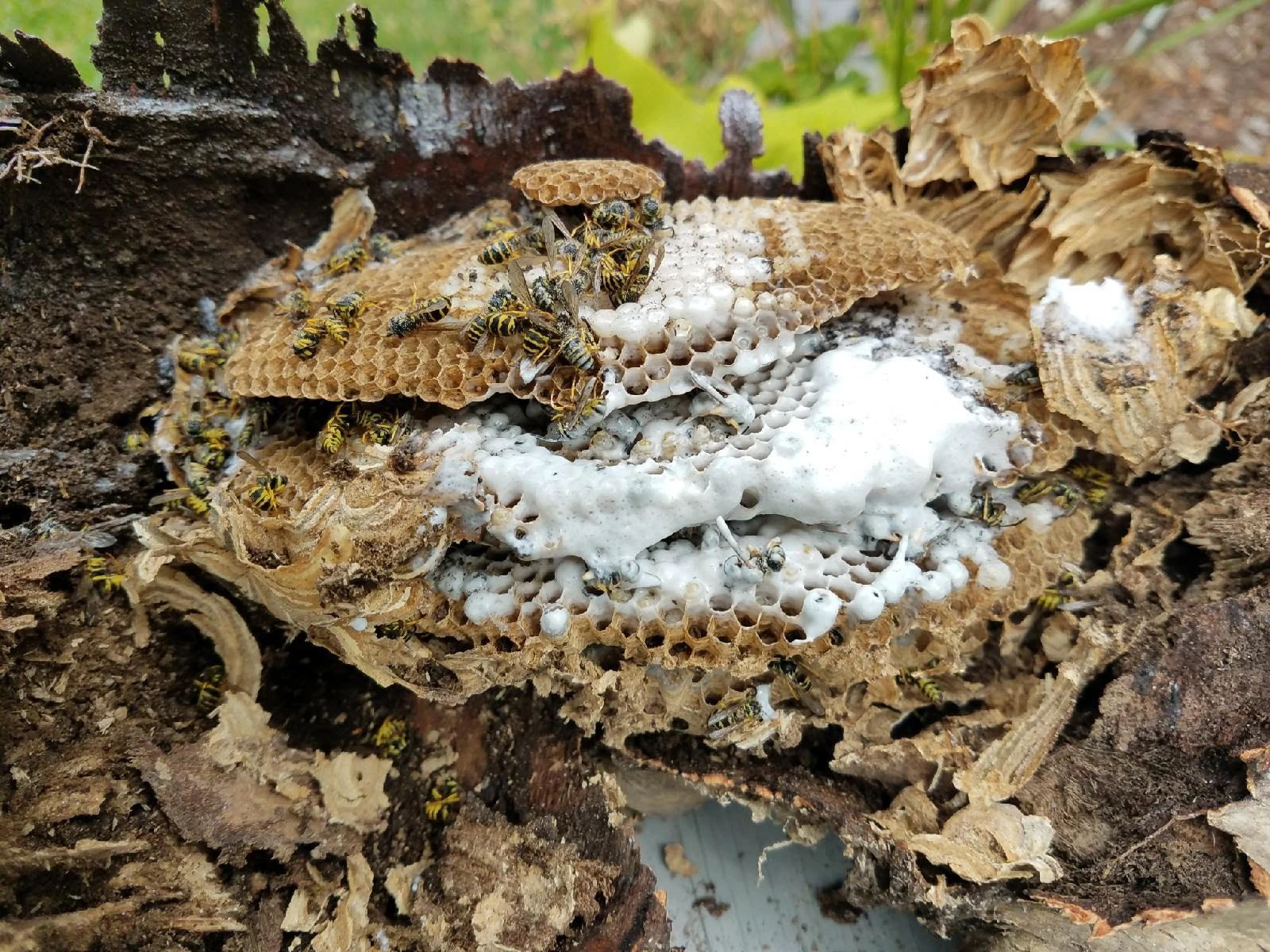
Typically, a medium-sized nest situated underground or within a wall cavity will produce approximately 500 to 1,000 queens and a comparable number of males as the first winter freeze approaches. These queens will depart in a reproductive swarm as the winter freeze nears. The nest may descend to a single queen sheltering over winter or become entirely empty after the initial hard freeze. It is the period leading up to this point that can be a nuisance and potentially dangerous.
Jeffrey has observed that the number of calls we receive in neighborhoods can fluctuate in location over time. For instance, one year, we've treated several nests in a specific geographic area, only to find that the same area has fewer nests overall during the following year. We hypothesize that treating a neighborhood disrupts the reproductive cycle of the queens by eliminating those that would have typically overwintered.
The timing of nest treatment varies annually. On March 16, 2026, the Kansas City Metro experienced a severe freeze that adversely affected colony growth due to compromised food sources. Additionally, we experienced a wet spring. Despite the delayed nest development, yellow jackets will eventually tend toward being aggressive. Therefore, we encourage our customers to identify any nests and contact us for treatment before they become a nuisance.
Yellowjackets frequently construct their nests in structures, akin to their behavior in trees and the ground. We have treated them in soffits, walls, floors, patios, driveways, and bath vents. Occasionally, a customer has attempted to seal a nest’s entry points with foam before contacting us for extermination.
Insects trapped inside will actively seek alternative exits. Rather than staying trapped, they will follow light sources or air currents and chew through drywall, plaster, or structural gaps into interior living spaces (such as bedrooms, bathrooms, or ceiling vents).Consequently, during the nest’s search for an alternative entrance, they have inadvertently poured into the home instead of continuing to utilize their exterior entrance. Regrettably, we have been compelled to drill a noticeable hole through their siding to bypass the foam and deliver the treatment material to the nest to eliminate it.
Independently of foaming the entrance shut, Jeffrey has received urgent calls when yellow jackets have chewed through drywall into living spaces. Jeffrey once received a call from a very shaken housewife. She had reached for her bath towel to dry off from her shower. The towel rack pulled out of the wall, and she was stung multiple times with nothing on her body to protect herself. Another example was when Jeffrey received a call from a husband who was anticipating a nice Saturday morning with his wife. Just before they both got out of bed, a nest of yellow jackets came pouring in through a newly chewed hole in the drywall of their bedroom, stinging them in bed.
It is imperative that we strike a harmonious balance between our professional responsibilities and our personal lives. Occasionally, the immediacy of a situation may challenge our ability to promptly arrive at a property and ensure the safety of the homeowner. We sincerely hope that we can mitigate the frequency of urgent calls by requesting that you prioritize the timely scheduling of extermination services. To date, we have maintained consistent pricing for both weekend and weekday workdays. In instances where urgent assistance is required outside of business hours, we can provide you with a quote that is typically double the standard rate.


Call: 913-440-4703 (MO or KS)
©2026 KC Bee Removal, LLC- All Rights Reserved
This website uses cookies. By continuing to use this site, you accept our use of cookies.